
Why Do People Share Listings on Poshmark?

I remember the first time I opened Poshmark. I saw a “share” button and thought, “Wait, why would I want to share someone else’s items?”
It felt like I was helping the competition instead of making money. Most new Poshmark sellers feel this exact same confusion.
On Poshmark, “sharing” isn’t just a social feature. It is the engine that drives the entire marketplace.
If you want to make more sales on Poshmark and see those “Order Ready” notifications, you have to understand how sharing works on Poshmark.
In this guide, I will break down exactly why people share listings on Poshmark. You will learn the difference between self-sharing and community sharing, and how to use both to boost your Poshmark sales.
What Does “Sharing” Mean on Poshmark?
At its simplest level, sharing is the act of reposting a listing so it appears at the top of the Poshmark feeds.
When you click that little recycling-symbol icon on Poshmark, you are “bumping” that item.
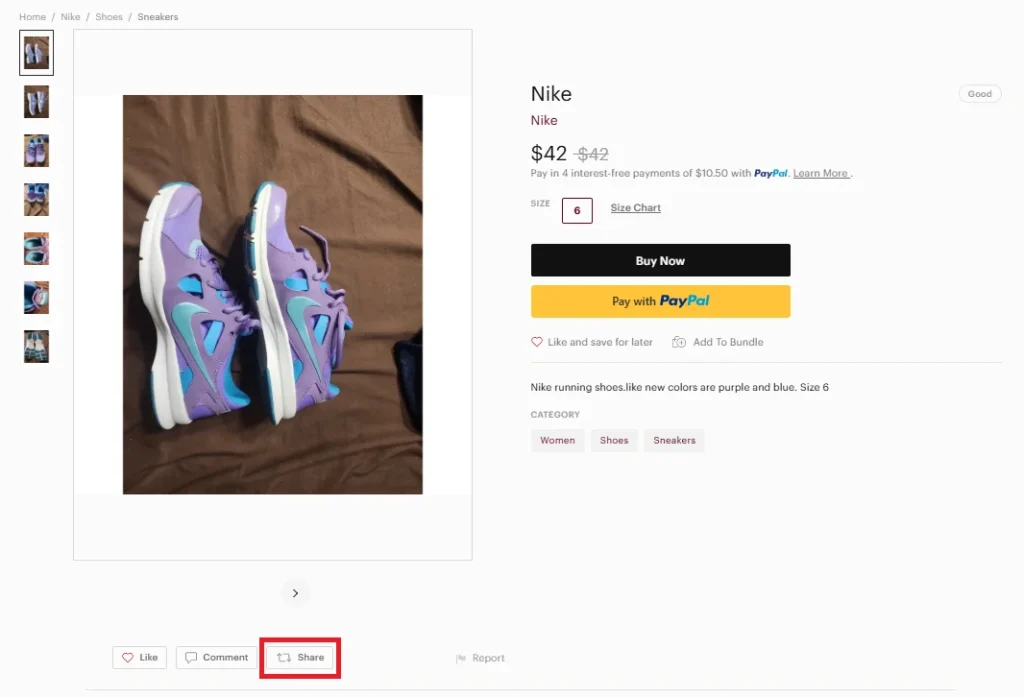
There are three main types of sharing on Poshmark you need to know.
Self-sharing is when you share your own items to your followers. This keeps your Poshmark closet fresh and visible.
Community sharing is when you share someone else’s listing. This sends that item to your followers and notifies the original seller.
Party sharing is when you share your items (or others’ items) at a Posh Party. This places those listings in a curated showroom visible to everyone participating in that Posh Party.
Shared items show up in your followers’ main feeds. More importantly, they appear at the top of search results and “Just Shared” filters.
Think of “Shares” as a constant digital refresh. Without sharing, your Poshmark listings will eventually sink to the bottom of the pile, where no one can find them.
Reasons People Share Listings on Poshmark
To Increase Visibility and Sales
This is the primary motivation for most Poshmark sellers. Every share pushes your listing to the top of the “Just Shared” search results, which is where most poshers look first.
Freshly shared items naturally garner more impressions, and in the Poshmark ecosystem, impressions are the precursor to likes.
More likes don’t just feel good; they create a list of buyers you can target with “offers to likers,” ultimately converting passive scrolling into consistent, successful sales for your closet.
To Stay Active in Poshmark Algorithm
Poshmark algorithm favors engagement and consistency. If you share regularly, the platform identifies your closet as “healthy,” “managed,” and active.
This algorithmic preference means your items are more likely to appear in search results compared to stagnant listings from inactive Poshmark accounts.
By sharing daily, you signal to Poshmark that you are a reliable, responsive seller. This digital “pulse” ensures your listings remains relevant and suggests to the algorithm that you are ready to ship orders quickly.
To Reciprocate Community Engagement
Poshmark thrives on a “you scratch my back, I’ll scratch yours” social culture. When you share another posher’s listing, she receives a direct notification, often prompting her to return the favor.
This reciprocal sharing creates a ripple effect, exposing your items to their specific set of followers whom you might never have reached otherwise.
Also, it transforms the marketplace into a collaborative community where sellers help one another get views, essentially crowdsourcing your marketing efforts through mutual digital support.
To Attract Poshmark Followers
Every share on Poshmark serves as a digital “hello” that puts your name in front of other poshers.
When you share someone’s items on Poshmark, it often piques their curiosity, leading them to click on your profile to see who you are.
If they resonate with your personal style or find your inventory appealing, they are likely to follow you.
This organic growth builds a loyal, long-term audience, ensuring that your future listings have a built-in viewer base the moment they go live.
To Participate in Posh Parties
Posh Parties are high-energy, real-time shopping events that provide massive visibility boosts.
Sharing during these parties is crucial because listings that fit the specific theme are curated into a special, high-traffic feed.
This is the best way to catch the eye of party hosts and potentially earn a “Host Pick” feature.
Such recognition can result in an explosion of likes and shares from thousands of attendees, bringing an unprecedented amount of attention to your closet in a short window.
To Become a Posh Ambassador
Achieving Posh Ambassador status is a major milestone that requires meeting strict, high-volume sharing benchmarks.
To unlock this “VIP” badge, you must share thousands of your own items and thousands of listings from the community.
The effort is well worth it, as the status grants you higher search credibility and a steady stream of recommended followers.
Also, it serves as a seal of approval from Poshmark, signaling to buyers that you are a trustworthy and highly active seller.
Does Sharing Other People’s Listings Actually Help You?
I’ll be honest: community sharing is a bit controversial. Some people think it’s a waste of time, but I disagree.
Sharing others’ listings helps you indirectly. It triggers a “reciprocity loop” where people share back, expanding your reach.
It also helps build the network effect. A busy, active Poshmark is a place where more people come to shop, which helps everyone.
However, don’t spend all your time sharing others. It is a secondary task meant to build relationships, not your main sales driver.
Self Sharing vs. Community Sharing
If you only have ten minutes, which one should you choose? The answer is self-sharing every single time.
Self-sharing has a direct impact on your sales. It puts your items in front of buyers who are actively searching for what you have.
Community sharing is about growth and networking. It is a long-term play, whereas self-sharing is a “sell it today” play.
I recommend a balance: 80% self-sharing and 20% community sharing. Focus on your own bank account first.
How Often Should You Share on Poshmark?
You can’t just share once a week and expect to quit your day job. Consistency is the name of the game.
I recommend sharing your entire closet 2 to 4 times per day. This ensures you hit different time zones.
The best times to share are when people are on their phones: early morning, lunch breaks, and late at night.
Specifically, the 10:00 PM EST Posh Party is the highest-traffic time on the app. Try to share your whole closet during that window.
Common Mistakes Sellers Make When Sharing
The biggest mistake I see is “Share-Spinning.” This is when you share 100 items from others but 0 of your own.
Another mistake is sharing at 3:00 AM when everyone is asleep. You want to share when the “Just Shared” feed is moving fast.
Inconsistency also kills sales. If you share 20 times on Monday and then go silent for a week, the Poshmark algorithm will “forget” you.
Lastly, don’t forget to prioritize your high-value items. If you have a $200 designer bag, share that one first and most often.
Is Sharing on Poshmark Still Worth It in 2026?
The short answer is: Yes. But the game has changed. In 2026, the market is more crowded than ever.
Sharing alone isn’t enough anymore. You can share a bad listing 1,000 times, and it still won’t sell.
Smart sellers combine frequent sharing with Search Engine Optimization (SEO). Your titles need the right keywords.
You also need high-quality photos and competitive prices. Sharing gets them to look; the quality gets them to buy.



Leave a Reply